

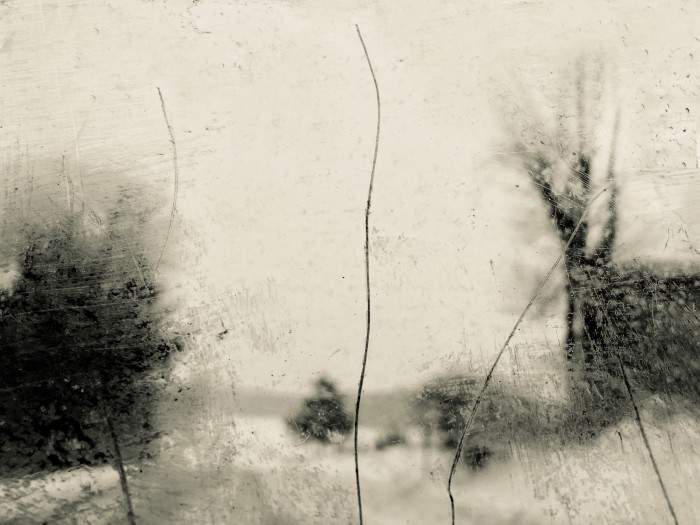
12½ x 16½ in | frame: 24½ × 19¼ in


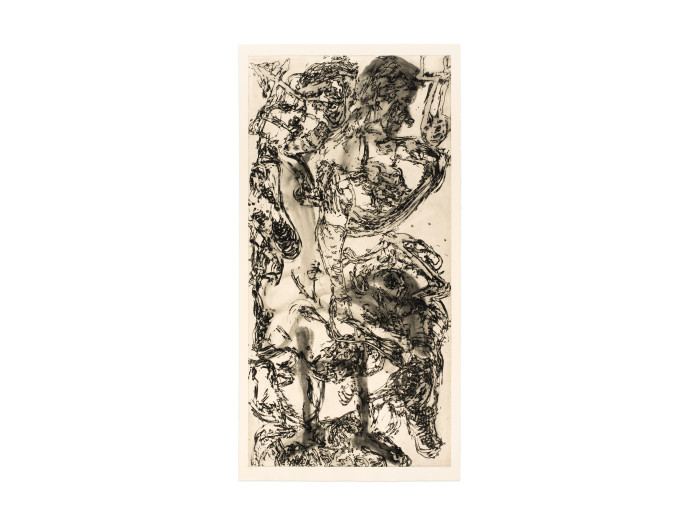
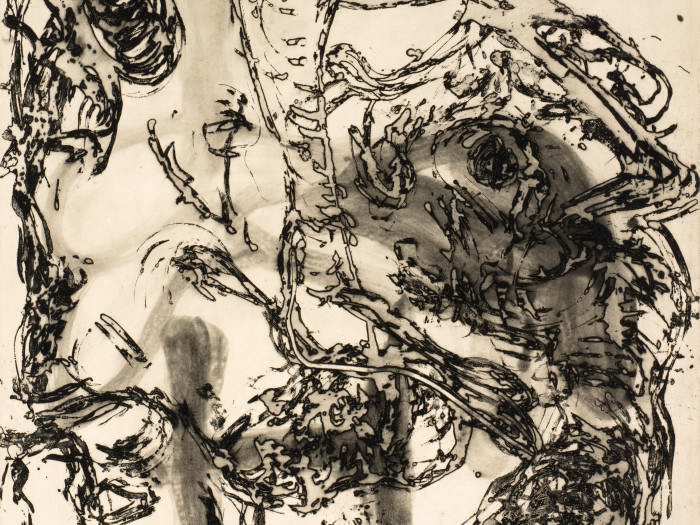
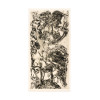
83 x 42¼ in
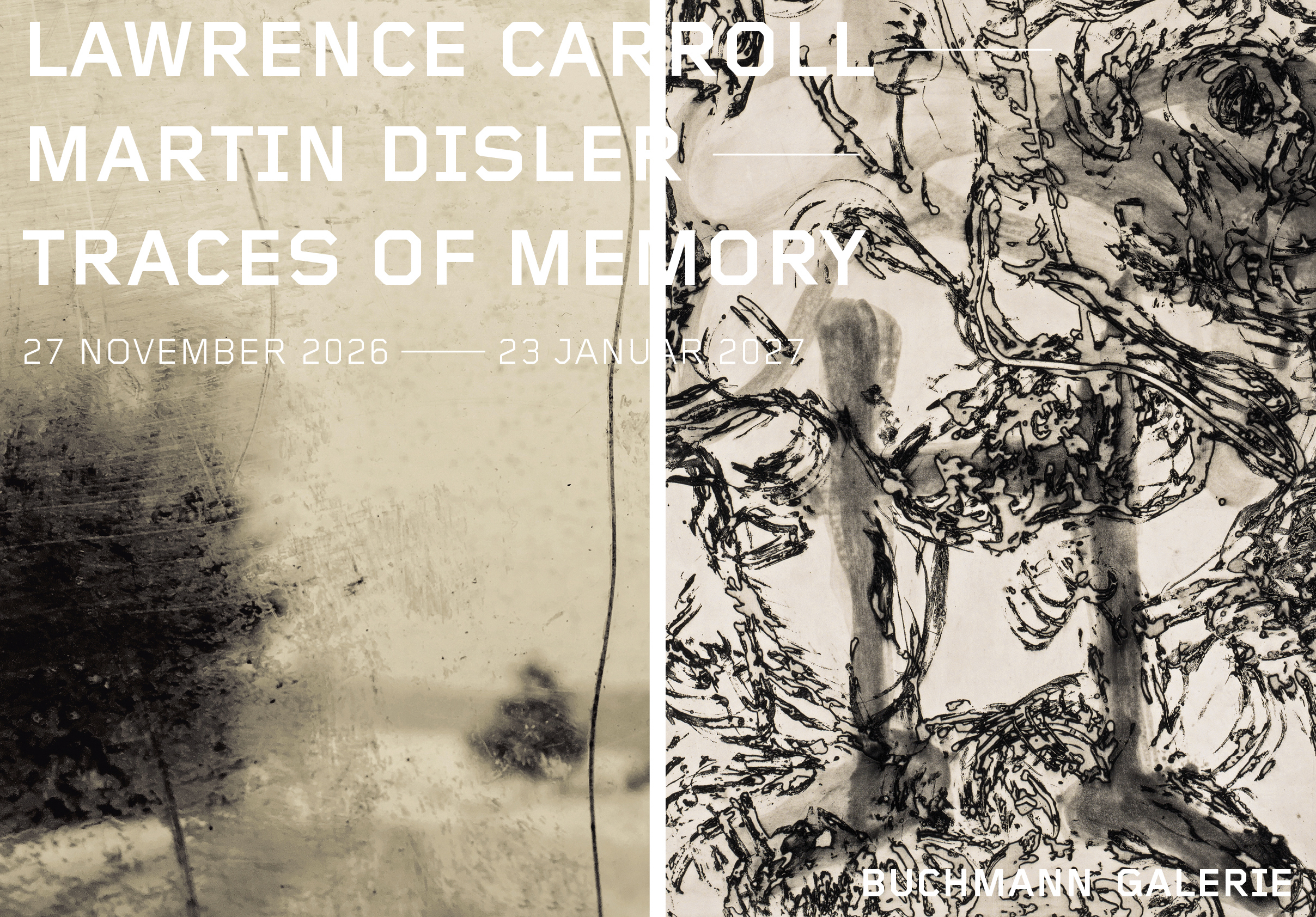
Lawrence Carroll – Martin Disler Traces of Memory
Martin Disler and Lawrence Carroll did not know each other personally, yet they shared a life characterised by constant movement and an unceasing commitment to their artistic practice.
Both were nomadic figures who repeatedly established their studios in new places, travelled extensively and remained open to new influences and sources of inspiration.
Lawrence Carroll lived in Los Angeles until the mid-1980s, before moving to New York, where he remained for several years. After periods in Malibu and a return to Los Angeles, he lived in Venice, Italy from 2007 onwards and, for a time, also maintained a studio in Marquette, Michigan. In 2005, he moved to Bolsena, Italy and, a few years later, also to Tivoli in New York State, maintaining residences in both places, each offering an environment for concentration. He died in 2019 at the age of 64.
During the 1980s, Martin Disler maintained studios in Zurich, Milan, Paris, Amsterdam, Samedan (Switzerland) and New York, before moving to Les Planchettes in the Swiss Jura in 1988. He lived and worked there until his untimely death in 1996, aged 47, leaving behind an extensive body of work.
The different places in which they lived, across several countries, provided both artists with important sources of inspiration for their diverse artistic practices. Both moved with ease between different media and forms of expression – from drawing and painting to sculpture and installation, and ultimately to working with the body.
Lawrence Carroll
Lawrence Carroll expanded his artistic practice, rooted in painting and sculpture, through collaborations with choreographers such as Meg Stuart. For Stuart's piece No One Is Watching (1995), he designed the stage set, translating his own visual language into the spatial context of a dance performance.
In 1997, Carroll directed the music video for Jewel's song You Were Meant for Me, which won an award at the MTV Video Music Awards that same year.
His engagement with the moving and cinematic image later found its way into his painting, notably in the Newspaper Paintings. During the 2010s, Carroll increasingly developed the newspaper, and particularly the photographic images it contained, into an independent facet of his artistic practice. For many of his exhibitions, he published newspapers that he had designed himself.
His turn to photography was a logical continuation of this development. The works presented in this exhibition were made in and around Tivoli and during extended road trips across the United States. Together, they form a kind of photographic diary. Rather than resulting from a deliberate search for particular subjects, the photographs emerged from an attitude of waiting, wandering and remaining receptive to whatever presented itself.
Carroll's understanding of photography is shaped by this openness. As he writes: “I wandered into these photographs. I didn’t go looking for them. They came to me.”
His photographs preserve more than impressions of a landscape; they reveal a particular attitude towards the world: a willingness to embrace the unexpected and to be attentive to the fleeting.
Martin Disler
Martin Disler repeatedly sought the point of complete exhaustion. Expansive works, such as the monumental 140-metre-long painting Die Umgebung der Liebe, were created over the course of just a few nights. At times, he conceived entire groups comprising several hundred works, only to execute them within a very short period, pushing himself to the limits of his strength.
In his graphic work, Martin Disler explored the possibilities of woodcut and linocut, etching, lithography and monotype with great intensity. The result is an extensive oeuvre, now represented in its entirety in the collection of the Cabinet des Estampes in Geneva.
The four prints presented in this exhibition, each measuring more than two metres in height, mark a culmination of his exploration of etching and aquatint. Through their monumental scale, Disler brings printmaking to the scale of painting without relinquishing the medium's distinctive intensity and richness of detail.
For Martin Disler, printmaking was an immediate, almost physical process. In his etchings in particular, the printing plate became a counterpart to his own body and, at the same time, an extension of it. Using needles, gouges and his hands, Disler worked the surface, engaging directly with the material and seeking a connection between physical gesture and artistic expression.
The force of the incised lines, the depth of the cuts and the intensity of the black bear witness to a process in which the movement of the body is inscribed into the surface. For Disler, printmaking became a process in which material, perception and physical experience are inseparably connected.
Lawrence Carroll and Martin Disler
An essential key to understanding the work of Lawrence Carroll and Martin Disler lies in its existential dimension. Their art emerges less from an analytical engagement with social, political or intellectual questions than from a profound inner need. The force of Disler's lines and the openness of Carroll's pictorial spaces can be understood as expressions of an immediate, physically experienced sense of existence.
As different as Martin Disler's and Lawrence Carroll's visual languages and artistic approaches may be, both understood artistic practice as a process of opening oneself to experience. In Disler's work, this takes the form of direct, at times forceful interventions into the material – through scratching, cutting and etching – translating inner upheavals into a physically tangible visual language.
In Carroll's work, the image emerges from a different attitude: one shaped by patience, movement, chance and a willingness to relinquish control. Where Disler tears open the surface, Carroll allows time to leave its traces. Both, however, seek a form in which experience can become concentrated without losing its openness.
Traces of Memory offers a perspective on two artistic positions that, in different ways, explore how lived experience is inscribed in art and how the fleeting can find a lasting form within it.
Lawrence Carroll
Born 1954 in Melbourne, died 2019 in Cologne.
Martin Disler
born 1949 in Seewen/CH, died 1996 in Geneva.


